

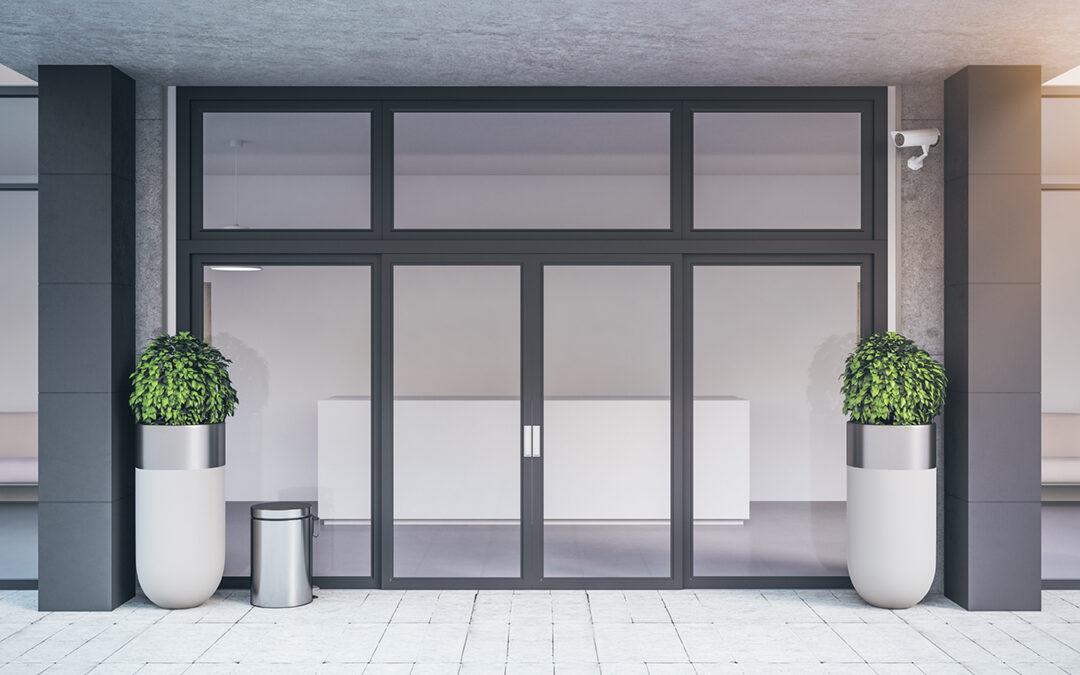
Commercial door installation for warehouse spaces should account for how each entrance is used, the movement of employees and materials, security requirements, weather exposure, and the condition of the building. Choosing the right door involves more than matching an existing opening. Warehouse owners need a practical installation plan that supports safe access, reliable operation, and daily business activities.
At Paramount Windows & Doors, we provide commercial window and door services for businesses throughout Western New York, including warehouses and industrial properties. From our location in Elma, NY, we work with commercial property owners, architects, and builders to help plan window and door projects that align with their building requirements.
Warehouse doors experience different operating conditions from doors installed in many other commercial settings. A retail entrance primarily accommodates customers, while a warehouse may have separate access points for employees, deliveries, visitors, and operational activities.
These differences influence how commercial doors should be selected and installed. The location of each entrance, frequency of use, available clearance, and surrounding activity can all affect the appropriate design.
For example, a doorway near an active receiving area may need different access arrangements from an entrance leading into an office within the same facility. Understanding these requirements early helps property owners make informed decisions without overlooking important operational considerations.
The goal is to select an appropriate commercial door solution for the building rather than assuming that every entrance requires the same product.
Before planning warehouse door installation, property owners should identify the entrances that serve different functions throughout their facilities.
Employee entrances often experience frequent use during shift changes, scheduled breaks, and routine daily movement. These access points should be evaluated for ease of operation, reliable closing, visibility, and appropriate access control.
Visitor entrances may have different priorities. Depending on the building, appearance and ease of navigation can be important alongside security and weather protection.
We encourage property owners to consider how each entrance supports the people who use the facility. A door that works well for occasional visitors may not be the most practical choice for an entrance used repeatedly throughout the workday.
Some warehouses have offices, administrative rooms, storage sections, or other enclosed spaces connected to the main operating area.
Doors separating these spaces may have different priorities from exterior entrances. Depending on the building, considerations can include employee movement, noise, privacy, and separation between work environments.
Commercial property managers should review the purpose of each opening before deciding whether an existing door needs replacement or whether a different configuration is appropriate.
Shipping and receiving areas can be among the busiest parts of a warehouse. Employee movement, material handling, and scheduled deliveries may occur near the same entrances.
When evaluating doors in these locations, consider the available clearance, surrounding traffic, and potential contact with equipment or transported materials.
Specialized loading-dock and overhead systems have different requirements from conventional commercial entrances. Their availability and installation scope should be confirmed separately rather than assumed as part of general commercial door installation.
A well-planned commercial door project balances building requirements with daily operations. Several considerations deserve attention before a door is selected.
These factors should be evaluated together. A door chosen primarily for appearance may not adequately address the demands of a busy warehouse entrance, while a highly durable option may still be unsuitable if its configuration interferes with normal movement.
We help commercial customers consider their broader property needs when discussing window and door installation projects.
An existing commercial door does not necessarily require replacement because it is older. However, certain problems can indicate that a professional evaluation is appropriate.
Common warning signs include:
These symptoms do not automatically mean the entire door must be replaced. The underlying problem may involve hardware, the opening, surrounding construction, or other conditions.
A professional assessment helps determine whether commercial door replacement is a reasonable next step.
The condition of the opening matters as much as the door being considered. Before selecting a replacement, a project team should review its dimensions, alignment, supporting structure, and relationship to surrounding walls.
An opening that appears suitable at first glance may require additional evaluation if there are signs of movement, moisture damage, or previous installation problems.
Appropriate measurements and product selection help establish whether the proposed door will fit the intended location.
Door installation can affect normal movement through a facility. Planning should account for the entrances employees use, scheduled deliveries, and operational activities near the work area.
Warehouse managers should identify which openings are essential to daily operations and communicate any access limitations early in the project.
Depending on the property, a coordinated installation plan may help reduce unnecessary interference with business activities. Actual scheduling and project requirements depend on the specific installation.
Not every commercial entrance involves the same products, hardware, or surrounding conditions. Property owners should clarify the door’s intended use, available product options, installation responsibilities, and any project-specific requirements.
Commercial projects may also involve coordination with architects, builders, or other design professionals. Applicable access and life-safety requirements should be reviewed by the responsible project professionals when relevant.
We work with architects and builders on commercial window and door projects, helping connect installation decisions with broader property goals.
Commercial buildings in Elma, NY, experience cold winters, snow, wind, moisture, and seasonal temperature changes. Exterior doors exposed to these conditions should be evaluated with weather performance in mind.
Repeated exposure can make the condition of door seals, frames, and adjacent construction especially important. Where drafts or moisture appear, the cause should be assessed rather than assuming that replacing the door alone will resolve the issue.
For heated warehouse offices or other conditioned areas, appropriate door selection and installation may help support more consistent indoor comfort. Actual results depend on the complete opening, surrounding building conditions, and how frequently the entrance is used.
When discussing commercial door installation in Western New York, we encourage facility owners to consider year-round operating conditions instead of focusing only on appearance.
Start by identifying the function of each doorway, how frequently it is used, and whether it serves employees, visitors, or operational areas. Building conditions, security priorities, weather exposure, and available clearance should also be reviewed before choosing a door.
Appropriate commercial doors can support a warehouse’s overall security strategy when their configuration and hardware match the property’s access needs. However, security depends on multiple factors, including the surrounding structure, access procedures, and the complete entrance system. A replacement door alone does not guarantee improved security.
No. Loading dock and overhead door systems may have specialized operating requirements that differ from conventional commercial entrances. Warehouse owners should identify the exact opening and required function before selecting an installer. Our commercial door services can be discussed during an evaluation to confirm whether a specific project falls within our scope.
Recurring operational difficulty, visible deterioration, unreliable closing, drafts, and changes in facility use can justify an evaluation. Replacement may be appropriate when the existing door no longer meets building needs, but the cause of the problem should be determined before a decision is made.
Yes. Our commercial window and door services include warehouses and industrial spaces, along with office buildings, storefronts, schools, apartment buildings, restaurants, and retail properties. We also work with architects and builders on commercial projects throughout our confirmed Western New York service area.
Every warehouse has different entrances, operating conditions, and property requirements. Choosing commercial doors requires careful consideration of access, durability, security, weather exposure, and the condition of existing openings.
At Paramount Windows & Doors, we provide commercial door installation services for warehouses and other business properties in Elma and our Western New York service areas. Our hands-on approach helps property owners review practical window and door solutions that suit their building needs.
If you are planning commercial door installation for warehouse spaces or evaluating existing entrances, request a free evaluation and estimate with our team today. We can discuss your project and help you explore appropriate commercial door options.

Clark Doll is the Owner of Paramount Windows and Doors and brings more than 20 years of experience in premium window and door installations. As an OSI Certified professional and factory-trained installer, he shares expert insights to help homeowners make informed decisions about their home improvement projects.