

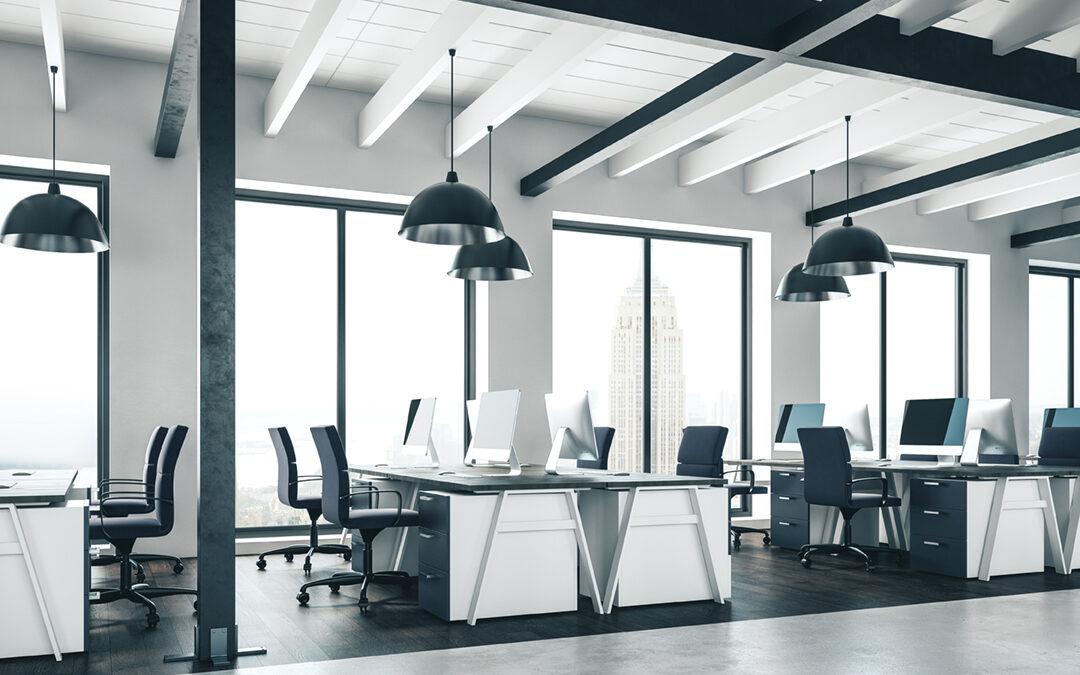
Commercial window replacement may be worth considering when a building develops recurring drafts, deteriorating frames, moisture between glass panes, difficult window operation, or persistent comfort problems near window openings. These warning signs can indicate declining window performance, but not every issue requires complete replacement. A professional evaluation helps determine whether the windows themselves or surrounding building conditions are responsible.
At Paramount Windows & Doors, we provide commercial window installation services for businesses in Elma, NY, and throughout our Western New York service area. We work with commercial property owners, architects, and builders on window and door projects for offices, retail spaces, warehouses, and other commercial buildings. Our focus is helping customers review practical solutions that support their property’s appearance and functionality.
Commercial windows contribute to natural lighting, indoor comfort, building appearance, and protection from outdoor conditions. As components age, certain problems may become more noticeable.
Understanding these warning signs can help property owners decide when a professional assessment should become part of their building maintenance or improvement plans.
Noticeable frame deterioration is a reason to evaluate existing commercial windows. Cracks, separation around joints, damaged components, or visible movement can suggest that the window assembly or surrounding opening needs attention.
The type of deterioration varies depending on the materials and conditions involved. A window exposed to frequent moisture may develop different problems from one affected by building movement or repeated operation.
Property managers should pay particular attention when deterioration appears across several openings. An evaluation can help establish whether the concern is isolated or part of a broader replacement need.
Cold air movement near windows can make offices, reception areas, and other occupied spaces uncomfortable during the heating season.
Recurring drafts may indicate gaps around the opening, worn seals, or other air-leakage concerns. However, air movement can also result from HVAC operation, building pressure differences, or surrounding construction.
Before investing in commercial window replacement, the source of the draft should be investigated.
Replacing an aging window may help reduce unwanted air leakage when the existing assembly is contributing to the problem. Actual comfort improvements depend on the selected product, installation, and overall building conditions.
Moisture trapped between panes of an insulated glass unit may indicate deterioration of the seal separating the glass layers.
This is different from condensation appearing on the room-facing surface of a window. Interior surface condensation may relate to humidity, ventilation, outdoor temperatures, or the temperature of the glass.
Persistent moisture between panes can affect clarity and indicate that part of the glazing assembly is no longer functioning as intended.
The appropriate response depends on the window’s construction and condition. A professional assessment can help determine whether replacement of the window assembly should be considered.
Water staining on interior walls, damaged finishes, or recurring moisture near window frames can indicate a problem that deserves investigation.
The source is not always the window itself. Water may enter through surrounding wall assemblies, deteriorated joints, or other parts of the building exterior.
Commercial property owners should document where moisture appears and whether it follows particular weather conditions.
Replacing windows without identifying the actual source of water entry may leave the underlying problem unresolved. Evaluating the complete opening is therefore an important part of replacement planning.
Difficulty operating commercial windows can become frustrating for occupants and property managers. Sticking, binding, damaged operating components, or windows that fail to close consistently may indicate wear or changes in the surrounding opening.
Not all commercial windows are designed to open. However, operable windows should function according to their intended design.
Where operation has deteriorated, an assessment can determine whether the problem involves individual components, alignment, or the larger window assembly.
If several windows are experiencing similar issues, a broader commercial window replacement evaluation may be appropriate.
Commercial windows can influence how employees and visitors experience a building. Excessive glare, uncomfortable conditions near the exterior walls, and uneven temperatures may draw attention to existing window performance.
These concerns can be particularly noticeable in offices with large exposed window areas or businesses where occupants spend extended periods near the building perimeter.
However, discomfort does not automatically establish that windows are defective. Sun exposure, shading, insulation, ventilation, and heating or cooling equipment also influence indoor conditions.
Replacement may be one potential solution when an evaluation identifies the existing windows as a meaningful contributor.
Some commercial window concerns can have causes outside the window assembly. It is important to distinguish visible symptoms from confirmed replacement needs.
For example, condensation on interior glass can occur when indoor humidity and window-surface temperatures create suitable conditions. Higher utility bills may reflect changing operating schedules, HVAC performance, or other building-envelope issues.
Similarly, a draft near a window may originate from gaps in surrounding construction rather than from the window itself.
An effective evaluation should identify the condition of the product, the surrounding opening, and other factors contributing to the complaint.
This approach helps commercial property owners avoid making replacement decisions based on incomplete information.
Commercial properties have different performance and appearance requirements. Window replacement planning should reflect the activities taking place inside the building.
For example, an office may prioritize comfortable working areas, controlled daylight, and a professional exterior appearance. A storefront may place greater importance on visibility, natural lighting, and the way the building presents itself to customers.
Warehouses and industrial spaces may have different priorities depending on whether windows serve offices, occupied work areas, or other parts of the facility.
At Paramount Windows & Doors, our commercial services include office buildings, storefronts, warehouses, schools, retail spaces, restaurants, apartment buildings, and industrial properties.
We recognize that commercial window installation should be approached according to the property’s function, existing conditions, and project requirements rather than treating every building alike.
After identifying potential replacement needs, property owners should consider the performance goals of the proposed windows.
Important factors include thermal performance, daylight, exposure to weather, ease of operation where applicable, and compatibility with the surrounding building opening.
Two commonly used window-efficiency terms are:
These concepts are explained through the National Fenestration Rating Council’s window performance information. Ratings should always be reviewed for the specific product and configuration being considered.
Frame design, glazing, operation, and surrounding building conditions can also influence performance, as described in the U.S. Department of Energy’s window technology guidance.
Commercial building owners should avoid assuming that one window configuration is suitable for every opening. The selection should reflect the actual building and the problems the replacement project is intended to address.
The quality of installation can influence how a replacement window performs after it is placed in the building.
General installation considerations include accurate measurements, proper positioning, suitable fastening, air sealing, water management, and compatibility with surrounding construction. The specific requirements depend on the window, opening, and building design.
A replacement window may have appropriate performance characteristics but still experience problems if the surrounding installation conditions are unsuitable.
For commercial property owners, installation planning should therefore include more than the appearance or advertised features of the window.
We work with architects and builders on commercial window and door projects, supporting coordination between the selected products and the broader building requirements.
Commercial buildings in Elma and Western New York experience cold winters, snow, wind, moisture, and warmer summer conditions.
These seasonal changes make window exposure, air leakage, moisture management, and indoor comfort relevant considerations during a commercial window replacement project.
Windows facing different directions may experience different levels of sunlight and weather exposure. Similarly, an office with conditioned workspaces may have different priorities from an industrial area with other operating requirements.
Property owners should review how the building is used throughout the year instead of selecting replacement windows based only on appearance.
An appropriate window system may help improve comfort and overall building-envelope performance, but actual results depend on the product, installation, and existing building conditions.
Before proceeding with replacement, building managers should document the problems they are experiencing and identify the areas affected.
A practical evaluation plan can include:
This preparation can make discussions with installation professionals more productive and help establish a realistic project scope.
Visible frame deterioration, moisture between glass panes, difficult window operation, persistent drafts, and recurring problems around window openings can indicate that replacement deserves consideration. These symptoms should be evaluated before determining whether the complete window assembly needs replacement.
Replacement windows may help improve comfort when existing units contribute to unwanted air leakage or poor thermal performance. However, comfort also depends on insulation, HVAC equipment, ventilation, building orientation, and other conditions. New windows cannot guarantee uniform temperatures throughout a commercial building.
Not necessarily. Condensation on the interior glass surface can be influenced by humidity, ventilation, and temperature differences. Moisture trapped between the panes of a sealed glass unit may indicate a seal problem. Identifying where moisture appears is important when evaluating the window’s condition.
Not always. The appropriate replacement scope depends on the condition of individual windows, building requirements, and project goals. Some properties may benefit from evaluating particular elevations or affected areas first, while others may consider a broader project during a planned renovation.
Discuss the condition of the existing openings, building use, daylight needs, weather exposure, operating requirements, and intended performance improvements. Property owners should also review the proposed project scope, installation considerations, available product specifications, and any necessary coordination with their design or building management teams.
Aging commercial windows can create concerns about comfort, operation, appearance, and overall building performance. Identifying the cause of these problems is the first step toward deciding whether replacement is appropriate.
At Paramount Windows & Doors, we provide commercial window installation services for businesses in Elma, NY, and our Western New York service areas. We help commercial property owners review window and door solutions suited to their buildings.
If your building has deteriorating window frames, persistent drafts, or other signs that commercial window replacement may be necessary, schedule a free evaluation and estimate with our team today. We can discuss your concerns and help you explore suitable window installation options.

Clark Doll is the Owner of Paramount Windows and Doors and brings more than 20 years of experience in premium window and door installations. As an OSI Certified professional and factory-trained installer, he shares expert insights to help homeowners make informed decisions about their home improvement projects.
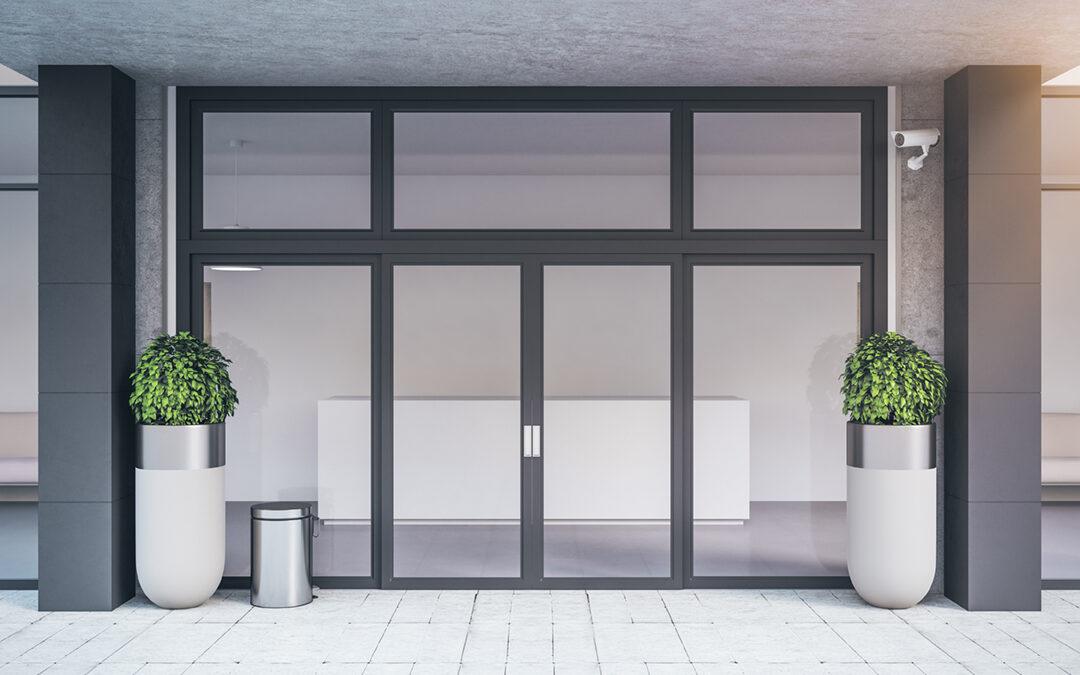
Commercial door installation for warehouse spaces should account for how each entrance is used, the movement of employees and materials, security requirements, weather exposure, and the condition of the building. Choosing the right door involves more than matching an existing opening. Warehouse owners need a practical installation plan that supports safe access, reliable operation, and daily business activities.
At Paramount Windows & Doors, we provide commercial window and door services for businesses throughout Western New York, including warehouses and industrial properties. From our location in Elma, NY, we work with commercial property owners, architects, and builders to help plan window and door projects that align with their building requirements.
Warehouse doors experience different operating conditions from doors installed in many other commercial settings. A retail entrance primarily accommodates customers, while a warehouse may have separate access points for employees, deliveries, visitors, and operational activities.
These differences influence how commercial doors should be selected and installed. The location of each entrance, frequency of use, available clearance, and surrounding activity can all affect the appropriate design.
For example, a doorway near an active receiving area may need different access arrangements from an entrance leading into an office within the same facility. Understanding these requirements early helps property owners make informed decisions without overlooking important operational considerations.
The goal is to select an appropriate commercial door solution for the building rather than assuming that every entrance requires the same product.
Before planning warehouse door installation, property owners should identify the entrances that serve different functions throughout their facilities.
Employee entrances often experience frequent use during shift changes, scheduled breaks, and routine daily movement. These access points should be evaluated for ease of operation, reliable closing, visibility, and appropriate access control.
Visitor entrances may have different priorities. Depending on the building, appearance and ease of navigation can be important alongside security and weather protection.
We encourage property owners to consider how each entrance supports the people who use the facility. A door that works well for occasional visitors may not be the most practical choice for an entrance used repeatedly throughout the workday.
Some warehouses have offices, administrative rooms, storage sections, or other enclosed spaces connected to the main operating area.
Doors separating these spaces may have different priorities from exterior entrances. Depending on the building, considerations can include employee movement, noise, privacy, and separation between work environments.
Commercial property managers should review the purpose of each opening before deciding whether an existing door needs replacement or whether a different configuration is appropriate.
Shipping and receiving areas can be among the busiest parts of a warehouse. Employee movement, material handling, and scheduled deliveries may occur near the same entrances.
When evaluating doors in these locations, consider the available clearance, surrounding traffic, and potential contact with equipment or transported materials.
Specialized loading-dock and overhead systems have different requirements from conventional commercial entrances. Their availability and installation scope should be confirmed separately rather than assumed as part of general commercial door installation.
A well-planned commercial door project balances building requirements with daily operations. Several considerations deserve attention before a door is selected.
These factors should be evaluated together. A door chosen primarily for appearance may not adequately address the demands of a busy warehouse entrance, while a highly durable option may still be unsuitable if its configuration interferes with normal movement.
We help commercial customers consider their broader property needs when discussing window and door installation projects.
An existing commercial door does not necessarily require replacement because it is older. However, certain problems can indicate that a professional evaluation is appropriate.
Common warning signs include:
These symptoms do not automatically mean the entire door must be replaced. The underlying problem may involve hardware, the opening, surrounding construction, or other conditions.
A professional assessment helps determine whether commercial door replacement is a reasonable next step.
The condition of the opening matters as much as the door being considered. Before selecting a replacement, a project team should review its dimensions, alignment, supporting structure, and relationship to surrounding walls.
An opening that appears suitable at first glance may require additional evaluation if there are signs of movement, moisture damage, or previous installation problems.
Appropriate measurements and product selection help establish whether the proposed door will fit the intended location.
Door installation can affect normal movement through a facility. Planning should account for the entrances employees use, scheduled deliveries, and operational activities near the work area.
Warehouse managers should identify which openings are essential to daily operations and communicate any access limitations early in the project.
Depending on the property, a coordinated installation plan may help reduce unnecessary interference with business activities. Actual scheduling and project requirements depend on the specific installation.
Not every commercial entrance involves the same products, hardware, or surrounding conditions. Property owners should clarify the door’s intended use, available product options, installation responsibilities, and any project-specific requirements.
Commercial projects may also involve coordination with architects, builders, or other design professionals. Applicable access and life-safety requirements should be reviewed by the responsible project professionals when relevant.
We work with architects and builders on commercial window and door projects, helping connect installation decisions with broader property goals.
Commercial buildings in Elma, NY, experience cold winters, snow, wind, moisture, and seasonal temperature changes. Exterior doors exposed to these conditions should be evaluated with weather performance in mind.
Repeated exposure can make the condition of door seals, frames, and adjacent construction especially important. Where drafts or moisture appear, the cause should be assessed rather than assuming that replacing the door alone will resolve the issue.
For heated warehouse offices or other conditioned areas, appropriate door selection and installation may help support more consistent indoor comfort. Actual results depend on the complete opening, surrounding building conditions, and how frequently the entrance is used.
When discussing commercial door installation in Western New York, we encourage facility owners to consider year-round operating conditions instead of focusing only on appearance.
Start by identifying the function of each doorway, how frequently it is used, and whether it serves employees, visitors, or operational areas. Building conditions, security priorities, weather exposure, and available clearance should also be reviewed before choosing a door.
Appropriate commercial doors can support a warehouse’s overall security strategy when their configuration and hardware match the property’s access needs. However, security depends on multiple factors, including the surrounding structure, access procedures, and the complete entrance system. A replacement door alone does not guarantee improved security.
No. Loading dock and overhead door systems may have specialized operating requirements that differ from conventional commercial entrances. Warehouse owners should identify the exact opening and required function before selecting an installer. Our commercial door services can be discussed during an evaluation to confirm whether a specific project falls within our scope.
Recurring operational difficulty, visible deterioration, unreliable closing, drafts, and changes in facility use can justify an evaluation. Replacement may be appropriate when the existing door no longer meets building needs, but the cause of the problem should be determined before a decision is made.
Yes. Our commercial window and door services include warehouses and industrial spaces, along with office buildings, storefronts, schools, apartment buildings, restaurants, and retail properties. We also work with architects and builders on commercial projects throughout our confirmed Western New York service area.
Every warehouse has different entrances, operating conditions, and property requirements. Choosing commercial doors requires careful consideration of access, durability, security, weather exposure, and the condition of existing openings.
At Paramount Windows & Doors, we provide commercial door installation services for warehouses and other business properties in Elma and our Western New York service areas. Our hands-on approach helps property owners review practical window and door solutions that suit their building needs.
If you are planning commercial door installation for warehouse spaces or evaluating existing entrances, request a free evaluation and estimate with our team today. We can discuss your project and help you explore appropriate commercial door options.
Clark Doll is the Owner of Paramount Windows and Doors and brings more than 20 years of experience in premium window and door installations. As an OSI Certified professional and factory-trained installer, he shares expert insights to help homeowners make informed decisions about their home improvement projects.
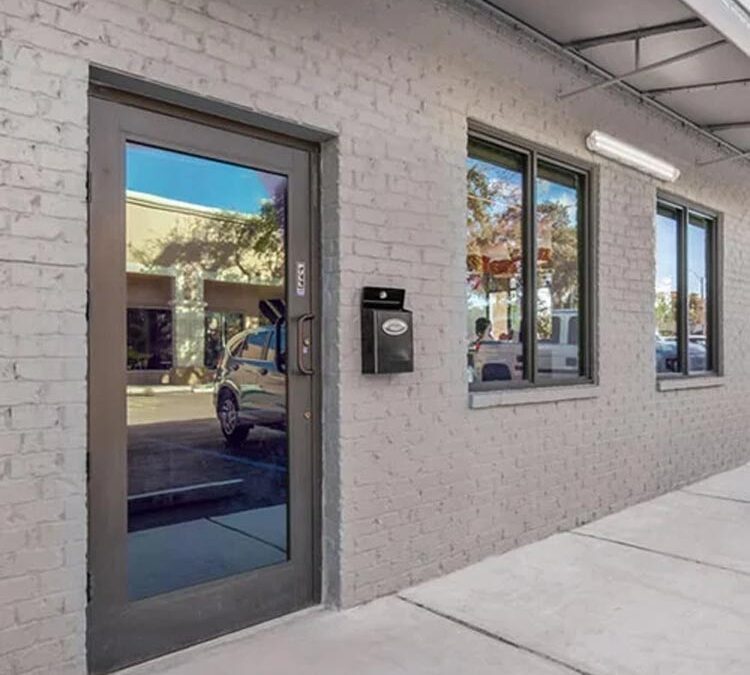
Steel door replacement can be a practical choice for homes in areas exposed to wind, rain, snow, moisture, and changing seasonal conditions. Steel is valued for strength, durability, straightforward maintenance, and affordability, but the material alone does not make every steel door appropriate for every storm exposure. The condition of the opening, door construction, fit, installation, and the specifications of the exact product all matter.
At Paramount Windows & Doors, we provide residential door installation and replacement in Elma, New York. Steel is one of the residential replacement-door materials we offer, alongside fiberglass, sliding glass, and wood or custom options. Our steel doors are positioned around strength, security, durability, easy maintenance, and practical value.
For homeowners considering a steel door because of demanding weather, the right approach is to evaluate the complete entrance rather than choosing a door based on material alone.
Exterior doors are exposed to more than everyday opening and closing. Depending on the location of the entrance, they may experience wind, precipitation, snow, moisture, temperature changes, and repeated seasonal exposure.
Steel can be appealing under these conditions because it provides a strong exterior surface and does not require the same maintenance approach as natural wood. Paramount Windows & Doors identifies steel doors as a durable, easy-maintenance option and notes that they are designed to handle harsh exterior conditions.
That makes steel worth evaluating when an existing exterior door is deteriorating or no longer operating as expected.
Strength, however, is only one part of the decision. A replacement door also needs to fit the opening correctly, close consistently, work with the surrounding frame, and suit the amount of weather exposure that particular side of the property receives.
A protected entrance beneath a substantial porch may experience very different conditions from a doorway directly exposed to prevailing wind and precipitation. Two homes in the same community can therefore require different door-selection considerations.
It is important to distinguish material strength from tested storm performance.
Choosing steel does not automatically mean that a door has a particular wind-pressure, impact-resistance, hurricane, or severe-weather rating. Those are product-specific characteristics that should be verified for the exact door system when they are relevant to the project.
For homeowners, this distinction prevents a common mistake: assuming that every strong material provides the same level of protection under every type of storm exposure.
When weather resistance is a major priority, evaluate the entire proposed door assembly. Depending on the configuration, relevant considerations may include:
The goal is not simply to purchase a steel slab. The goal is to create a properly functioning exterior entrance suited to the property.
A door does not need replacement simply because it has been exposed to several storms. Condition and operation are more useful indicators.
A professional evaluation may be appropriate when you notice problems such as:
These symptoms do not automatically prove that the door itself is the only problem.
Changes in framing, worn seals, hardware issues, threshold conditions, movement around the opening, or surrounding building-envelope problems can affect how an entrance performs. That is why evaluating the existing conditions before selecting the replacement is important.
A successful steel door replacement begins with the property, not with a catalog.
Think about what the entrance experiences throughout the year.
An exterior door facing an open area may receive more direct wind and precipitation than a doorway protected by nearby construction, an overhang, or other architectural features. Exposure can influence product selection as well as installation and finishing considerations.
For properties in Elma and other confirmed Western New York service areas, seasonal changes can include cold weather, snow, moisture, wind, and warmer summer conditions. Paramount Windows & Doors serves Elma along with communities including Buffalo, Amherst, Williamsville, East Aurora, Orchard Park, West Falls, Colden, Hamburg, West Seneca, Cheektowaga, Lancaster, and Tonawanda.
The condition of the current opening matters because a new door must work within the surrounding structure.
Visible deterioration, an uneven threshold, recurring operational issues, or a frame that no longer appears square should be evaluated before a replacement product is ordered.
Replacing only the visible door without understanding the opening can leave the underlying concern unaddressed.
Steel doors are not limited to a single appearance.
Our residential door selection includes steel options that can provide traditional wood-grain styling as well as smooth surfaces for a more contemporary appearance. Steel surfaces are also paintable, giving homeowners another factor to consider when coordinating a new door with the exterior of the property.
Appearance should be considered alongside strength, maintenance, exposure, and budget.
Even a strong exterior door depends on correct installation.
A replacement door has to fit the opening accurately and operate without unnecessary binding or movement. General exterior-door installation considerations can include measurements, preparation of the opening, correct positioning, fastening, sealing, threshold conditions, and interior and exterior finishing.
Poor fit can create problems that have little to do with the door material itself.
For example, an otherwise suitable steel door may still be frustrating if it does not close correctly or if gaps around the opening allow unwanted air movement. Installation is therefore part of the performance decision, not simply the final step after product selection.
Because exterior door replacement can involve structural openings, heavy components, glazing, water management, and precise alignment, professional installation is generally preferable to treating the project as a basic do-it-yourself door swap.
Elma properties experience meaningful seasonal changes, making exterior exposure a practical consideration when planning door replacement.
Cold winters, snow, wind, moisture, temperature fluctuations, and summer heat can place repeated demands on exterior building components. That does not mean every Elma home needs a steel door, nor does it mean steel is automatically superior to every other material.
Instead, local conditions should become one part of the selection process.
A homeowner who prioritizes strength, easy maintenance, and practical cost may find steel particularly appealing. Another property may be better suited to fiberglass or wood depending on appearance goals, opening conditions, maintenance preferences, and the specific product being considered.
At Paramount Windows & Doors, we offer multiple residential door materials so the decision can be based on the actual entrance rather than a one-material-fits-all recommendation.
Storm resistance may begin the research process, but homeowners often have other priorities.
Steel doors can also appeal to homeowners looking for a strong exterior material, straightforward maintenance, paintable surfaces, and a cost-conscious alternative to some other door materials.
Our residential door information identifies steel as typically the most budget-friendly choice among steel, fiberglass, and wood. Actual project pricing still depends on the specific door and project requirements, so homeowners should compare the complete proposed solution rather than assuming material alone determines cost.
Security may also influence the decision. Steel is a strong material, but the performance of an entrance depends on the complete door system, including its configuration, frame, hardware, installation, and surrounding conditions. A steel label by itself should not be treated as a guarantee of a particular security performance level.
Steel can be a strong option when durability and exterior exposure are important considerations. However, steel construction alone does not confirm a specific storm or impact rating. The exact door system, opening, installation, and required performance specifications should all be reviewed.
No exterior door should be expected to eliminate every draft automatically. Unwanted air movement can involve the door, seals, frame, threshold, installation, or surrounding building conditions. Correct product selection and installation may help address air leakage when the entrance itself is contributing to the problem.
Difficulty opening or closing, visible deterioration, corrosion, recurring drafts, inconsistent latching, frame damage, and increasing maintenance requirements are reasonable reasons to have the entrance evaluated.
Steel is generally considered a straightforward-maintenance exterior door material. Paramount Windows & Doors specifically identifies easy maintenance as one of the benefits of its steel door selection. Maintenance needs can still vary according to the product, finish, exposure, damage, and use.
Yes. We provide residential door installation and replacement from Elma, New York, and steel is one of the confirmed residential door materials we offer. We also provide a free evaluation and estimate for prospective projects.
Steel door replacement can make sense when an exterior entrance has deteriorated or when strength, durability, straightforward maintenance, and weather exposure have become important priorities.
The key is to evaluate more than the material. The existing opening, exposure, fit, installation, operation, appearance, and specifications of the exact replacement door all contribute to the finished result.
At Paramount Windows & Doors, we help homeowners review residential door replacement options based on the needs of the property. If you are considering a steel door replacement in Elma or another community within our confirmed Western New York service area, contact us to schedule a free evaluation and estimate.
Clark Doll is the Owner of Paramount Windows and Doors and brings more than 20 years of experience in premium window and door installations. As an OSI Certified professional and factory-trained installer, he shares expert insights to help homeowners make informed decisions about their home improvement projects.
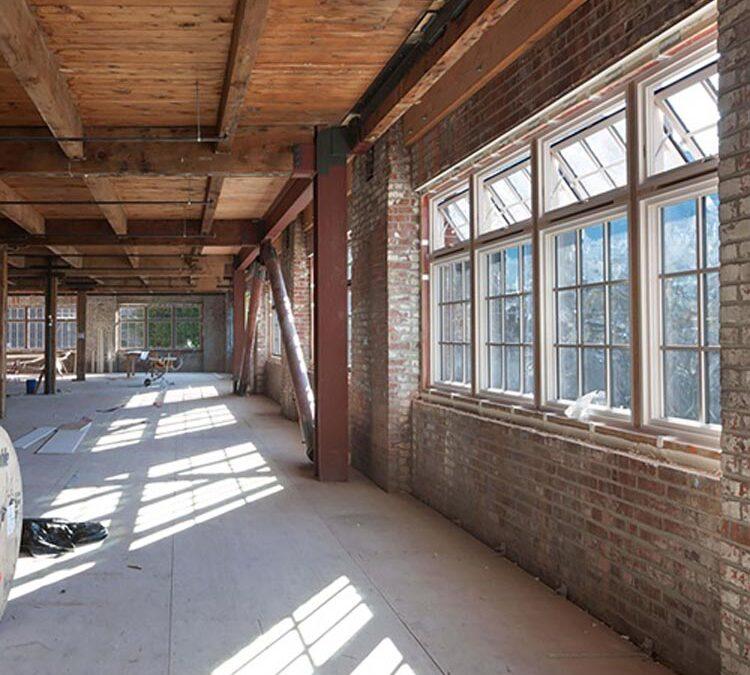
Energy-efficient commercial windows can help businesses manage heat transfer, solar heat gain, air leakage, daylight, and indoor comfort more effectively. Their actual performance depends on the complete window system, its energy ratings, building orientation, surrounding construction, installation quality, and the condition of the commercial property.
At Paramount Windows & Doors, we provide commercial window and door solutions from Elma, New York. Our confirmed commercial work includes apartment buildings, schools, storefronts, office buildings, industrial spaces, warehouses, retail spaces, and restaurants. We also work with architects and builders on commercial window and door projects.
For local businesses planning new commercial window installation or evaluating aging windows, energy performance should be considered alongside appearance, operation, building use, exposure, and installation requirements.
Windows are part of a commercial building’s exterior envelope, which separates conditioned indoor spaces from outdoor conditions. The U.S. Department of Energy identifies windows as an important component of building energy performance and notes that high-performance windows can contribute to both efficiency and comfort.
For a business, that matters throughout the year.
During colder periods, windows influence how readily heat moves through the building envelope. During warmer and sunnier conditions, windows also affect how much solar heat enters through the glazing.
Energy-efficient commercial windows are designed to manage these exchanges more effectively than poorly performing alternatives, but they should not be treated as a guarantee of a particular reduction in utility costs. Actual results depend on the building as a whole.
HVAC equipment, insulation, air sealing, occupancy patterns, operating hours, window area, building orientation, and existing conditions can all affect energy use.
Terms such as U-factor and SHGC can sound technical, but they become useful once they are connected to the decisions a property owner actually needs to make.
The National Fenestration Rating Council provides independent performance ratings that allow fenestration products to be compared using standardized measurements. Relevant ratings can include U-factor, solar heat gain coefficient, visible transmittance, and air leakage.
U-factor describes the rate of heat transfer through a window assembly.
In simple terms, a lower U-factor indicates better resistance to heat flow. For a commercial property in a climate with a substantial heating season, this can be an important metric when comparing window systems.
It should still be considered together with the rest of the window’s performance characteristics rather than used as the only selection criterion.
Solar heat gain coefficient, or SHGC, describes how much solar heat is transmitted through a window.
A lower SHGC means less solar heat is admitted, while a higher value permits more solar heat through the window. The appropriate balance depends on climate, orientation, shading, building use, and the design goals for that particular elevation.
A heavily sun-exposed storefront may have different priorities from a shaded window on another side of the same building.
Visible transmittance relates to how much visible daylight passes through the product.
Natural light can contribute to the character and usability of offices, retail environments, restaurants, and other commercial spaces. However, simply maximizing daylight is not always the goal. Building owners may also need to consider glare, solar exposure, privacy, merchandise display requirements, and interior layout.
Air leakage ratings describe the amount of air that passes through a fenestration product under defined testing conditions.
When existing windows allow unwanted air movement, replacing them with appropriately selected and installed units may help improve conditions around the opening. That does not mean every draft originates from the window itself. Wall assemblies, joints, doors, mechanical systems, and other parts of the building envelope can also contribute.
The value of an efficient commercial window system goes beyond a single energy metric.
Older or poorly performing windows can contribute to uncomfortable conditions near the building perimeter.
During cold weather, interior surfaces near windows may feel noticeably cooler. During strong sun exposure, some areas may feel warmer than surrounding spaces.
Appropriately selected commercial windows can help manage heat transfer and solar gain, supporting more consistent comfort near exterior walls. Actual comfort will still depend on the complete building, including HVAC distribution and insulation.
Fenestration affects the amount of heat a building gains and loses. The Department of Energy notes that window characteristics influence building heating and cooling requirements.
For a business evaluating replacement windows, this means window performance should be reviewed as part of the larger building-efficiency strategy.
The correct goal is not to promise that new windows will automatically cut a utility bill by a particular amount. Instead, the goal is to select products that fit the building’s climate, exposure, design, and operational needs while addressing deficiencies in the existing openings.
Commercial windows influence how interior spaces interact with daylight.
Storefronts may use windows to create openness and visibility. Offices may value daylight in work areas. Restaurants may want brighter dining spaces, while schools and other facilities may need to balance daylight with glare and room function.
Paramount Windows & Doors serves all of these confirmed commercial property categories, allowing window selection to be considered in the context of the building’s actual use.
Energy-efficient commercial window planning should therefore consider daylight and solar performance together rather than assuming that more glass is always better.
Windows are a significant part of many commercial façades.
For storefronts and restaurants, they can shape the customer’s first visual impression. For offices, apartment buildings, schools, industrial properties, and warehouses, they also contribute to the overall exterior design.
Replacement can provide an opportunity to coordinate energy-performance goals with the appearance and function of the building. That is especially useful when aging windows no longer fit the property’s renovation plans.
An energy-efficiency project can also reveal broader window concerns.
Commercial window replacement may be worth evaluating when existing units are difficult to operate, visibly deteriorated, affected by failed seals, allowing recurring air movement, or creating persistent comfort concerns near the building perimeter.
Moisture between panes may indicate a different issue from interior surface condensation. Interior condensation can also be affected by humidity, ventilation, outdoor temperature, and surface temperature.
A professional evaluation helps separate symptoms from causes before a replacement scope is established.
Product ratings describe the window itself, but a commercial project also depends on how that window interacts with the building opening.
General installation considerations can include accurate measurements, preparation of the opening, level and square positioning, appropriate fastening, insulation, air sealing, flashing, and finishing. Exact requirements vary according to the building, product, opening, wall system, and project conditions.
A high-performing window installed poorly may not deliver the expected building-envelope performance.
Unintended gaps around an opening can affect air movement and comfort. Poor water management can create separate problems around the surrounding construction. Incorrect placement or fastening can affect operation.
Commercial window installation should therefore be planned as part of the building envelope rather than treating the window as an isolated component.
Commercial properties in Elma experience cold winters, snow, wind, moisture, seasonal temperature changes, and warmer summer weather.
Those conditions make both thermal performance and exposure worth considering when commercial windows are specified.
One side of a building may face stronger wind, while another receives more direct sunlight. A street-facing storefront may have different glazing priorities from windows serving an office or warehouse area. The building’s use can also change the importance of daylight, privacy, solar gain, and operation.
There is therefore no single energy rating or commercial window configuration that is automatically right for every local business.
Property owners and project teams should review the needs of each building and, when necessary, each elevation.
Paramount Windows & Doors provides commercial window and door solutions for a range of verified property types in Western New York.
These include:
We also work with architects and builders, which allows window and door decisions to be considered within broader commercial design and construction plans.
That commercial focus is important because business properties should not simply be approached as larger versions of residential window projects. Building use, opening size, occupancy, design requirements, exposure, and project coordination can create different priorities.
Energy efficiency depends on the complete window system. Relevant factors can include glazing, frame construction, air leakage, U-factor, solar heat gain coefficient, orientation, installation quality, and the surrounding building envelope. No single feature determines the performance of every commercial window.
A lower U-factor means the product is better at resisting heat flow. It is one of the primary ratings used to compare the thermal performance of windows and other fenestration products.
Not necessarily. SHGC should be evaluated according to climate, orientation, shading, daylight goals, and building use. Different elevations of the same commercial property may experience different levels of solar exposure.
No. Energy-efficient windows can support improved building-envelope performance, but utility costs depend on many variables, including HVAC equipment, insulation, operating schedules, occupancy, weather, building size, and existing conditions. Specific savings should not be assumed without project-specific analysis.
Our commercial work includes apartment buildings, schools, storefronts, office buildings, industrial spaces, warehouses, retail spaces, and restaurants. We also work with architects and builders on commercial window and door projects.
Energy-efficient commercial windows can be an important part of improving how a building manages heat transfer, solar gain, air movement, daylight, and indoor comfort.
The right solution depends on more than a label or a single rating. Building orientation, window exposure, commercial use, existing conditions, installation requirements, U-factor, SHGC, visible transmittance, and air leakage can all contribute to the decision.
At Paramount Windows & Doors, we work with local businesses, property owners, architects, and builders on commercial window and door projects. If aging windows are creating performance concerns or you are planning an improvement to your commercial property, contact us to schedule a free evaluation and estimate in Elma or another confirmed Western New York service area.
Clark Doll is the Owner of Paramount Windows and Doors and brings more than 20 years of experience in premium window and door installations. As an OSI Certified professional and factory-trained installer, he shares expert insights to help homeowners make informed decisions about their home improvement projects.
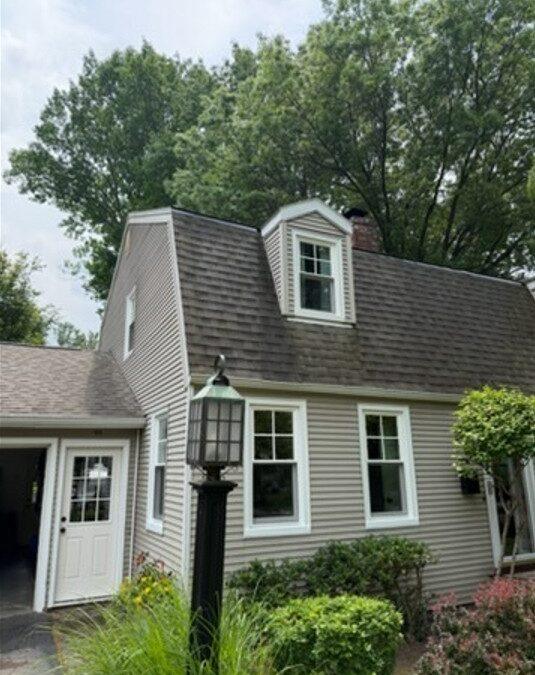
Reducing outside noise with fiberglass windows is possible when the window is selected and installed as a complete system designed to limit common sound paths. Fiberglass provides a strong, dimensionally stable frame material, but the frame alone does not determine how quiet a room will feel. Glass construction, seals, air leakage, the condition of the opening, and installation quality can all influence the result.
At Paramount Windows & Doors, we provide residential window installation and replacement in Elma, NY, with fiberglass among the replacement window materials available to homeowners. When noise is one of your concerns, we can help evaluate the existing openings and discuss window options that fit your home’s broader comfort, appearance, and performance goals.
Windows are one part of the exterior building envelope separating the inside of your home from traffic, neighboring properties, outdoor equipment, weather, and everyday community activity. Because a window combines glass, a frame, movable or fixed components, seals, and connections to the wall opening, sound may find several potential paths into a room.
An older window does not necessarily need replacement simply because you can hear outdoor activity. However, noticeable noise combined with drafts, deteriorated frames, poor operation, damaged seals, or other performance concerns can make the opening worth evaluating.
The Federal Highway Administration’s guidance on building noise insulation explains that the sound performance of an exterior assembly is affected by its different components and by gaps or other paths through the construction. In practical terms, that means homeowners should look beyond a frame material alone when evaluating a window for noise concerns.
Fiberglass is a strong window-frame material that can maintain its shape through changing conditions. Our fiberglass window options are valued for durability, strength, low maintenance, minimal expansion and contraction, and resistance to dents, bends, and breaks.
Those properties can be useful when you are trying to maintain a consistent window fit over time.
A window has to remain properly fitted within its opening for the full assembly to perform as intended. Excessive movement or deterioration can contribute to gaps and other performance concerns.
Fiberglass is known for dimensional stability, meaning it experiences relatively limited movement as environmental conditions change. In Elma, where homes experience cold winters, warmer summers, wind, snow, and seasonal temperature changes, frame stability can be a practical consideration when comparing replacement materials.
That does not mean fiberglass automatically blocks more noise than every other frame material. Sound performance must be evaluated using the complete window design rather than the frame in isolation.
Small openings and gaps around windows can allow outdoor air into a home. They can also create paths through which outside sound becomes more noticeable.
The U.S. Department of Energy identifies windows and doors as common locations for air leakage and notes that proper air sealing contributes to home comfort. The same principle is useful when thinking about unwanted sound: a window that does not fit or seal properly may provide easier pathways between the exterior and interior.
Replacing an aging window may help address these conditions when the window itself is part of the problem, but the actual cause should be evaluated before assuming replacement is necessary.
When homeowners ask us about noise-reducing windows, one of the most important points is that there is no single feature that determines performance.
A fiberglass frame may be an excellent starting point because of its strength and stability, but homeowners should consider the complete assembly.
A large percentage of the visible window area is glass, so glazing design can have a major influence on how sound passes through the opening.
Different window products may use different glass configurations. Rather than assuming that a particular number of panes, glass thickness, or package will provide a specific noise reduction, review the specifications for the exact window being considered.
We do not recommend selecting a window based on an unsupported sound-reduction promise.
Operable windows include components that need to close and seal correctly. If a window is difficult to close, visibly misaligned, or no longer sealing as intended, both air and outside noise may become more noticeable.
A professional evaluation can help determine whether the concern appears to involve the window itself, the surrounding opening, installation conditions, or another part of the building envelope.
Air leakage is a recognized window-performance characteristic. The National Fenestration Rating Council explains that air leakage ratings measure the amount of air that passes through a fenestration product under defined testing conditions. This is an energy-performance metric rather than a sound rating, but it reinforces why evaluating the entire window assembly is important.
Even a well-made window depends on proper installation. Accurate measurements, correct positioning, appropriate fastening, insulation, air sealing, and finishing can all affect how the completed opening performs.
A window that leaves unintended gaps around the frame may not deliver the comfort homeowners expected from the product itself.
Noise by itself does not prove that a window has failed. Instead, consider whether outside sound is appearing alongside other changes in the window’s condition or operation.
An evaluation may be worthwhile if you notice:
Some of these symptoms can have causes outside the window itself. Indoor humidity, insulation, ventilation, wall conditions, seasonal weather, and other building-envelope issues may also contribute to comfort problems.
That is why we recommend evaluating the existing opening before deciding that replacement is the appropriate solution.
If reducing outdoor noise is an important goal, start by identifying what you actually hear and where it seems to enter.
Traffic noise may create a different experience from intermittent voices, lawn equipment, barking dogs, or other neighborhood sounds. A bedroom facing a road may also have different priorities from a living room on a quieter side of the property.
When comparing fiberglass replacement windows, consider questions such as:
This approach helps prevent a homeowner from choosing a frame material based on a single benefit while overlooking the rest of the window system.
Noise may be the reason you begin researching replacement windows, but homes in Elma also have to deal with changing seasonal conditions.
Cold winter temperatures, snow, wind, moisture, and summer heat can all affect exterior building components. Fiberglass offers strength, low maintenance, and limited expansion and contraction, making it a material worth considering for homeowners who want durable replacement windows.
Our fiberglass windows are also available with smooth or wood-like appearances and in assorted styles and colors, allowing homeowners to consider aesthetics alongside practical performance.
The right choice still depends on the particular home, opening, product configuration, and homeowner priorities.
Reducing unwanted sound is not simply a matter of placing a new window into an existing opening.
Measurements need to be accurate, and the window must work with the actual conditions of the opening. Installation details can affect air leakage, operation, water management, comfort, and overall performance.
At Paramount Windows & Doors, our process begins with a conversation about the project. We offer a free, no-obligation in-home evaluation and estimate, bring window samples to the meeting, evaluate the property, discuss available solutions, and help homeowners select appropriate materials before installation is scheduled.
This gives us an opportunity to understand whether noise is the main concern or part of a broader window-performance issue.
No window should be expected to eliminate every outdoor sound. Fiberglass windows may contribute to a quieter indoor environment when the complete window system is well suited to the opening, but actual results depend on glass construction, seals, installation, surrounding walls, the sound source, and existing conditions.
Not necessarily. Fiberglass and vinyl have different material characteristics, but frame material alone does not determine sound performance. Compare the complete window configuration and available performance information rather than assuming one material will always be quieter.
Yes. Glass makes up a substantial portion of most windows, so glazing construction can affect sound transmission. Available options vary by product, which is why homeowners should review specifications for the exact replacement window being considered instead of relying on general assumptions.
Installation can influence the pathways through which air and sound enter around a window. Accurate fitting and proper sealing are important parts of overall window performance. Other parts of the wall or building envelope can also contribute to noise, so results vary by home.
Yes. We offer residential window installation and replacement in Elma, including fiberglass windows as one of our verified replacement window materials. We can evaluate your project and help you compare available options based on your home’s needs.
If outside noise has become more noticeable and your existing windows are also showing signs of age, poor operation, drafts, or deterioration, reducing outside noise with fiberglass windows may be one factor to consider in your replacement plan.
At Paramount Windows & Doors, we help Elma homeowners evaluate their existing window openings and compare fiberglass, vinyl, and wood replacement options. Contact us to schedule a free evaluation and estimate and discuss which window solution fits your home’s comfort, appearance, maintenance, and performance priorities.
Clark Doll is the Owner of Paramount Windows and Doors and brings more than 20 years of experience in premium window and door installations. As an OSI Certified professional and factory-trained installer, he shares expert insights to help homeowners make informed decisions about their home improvement projects.
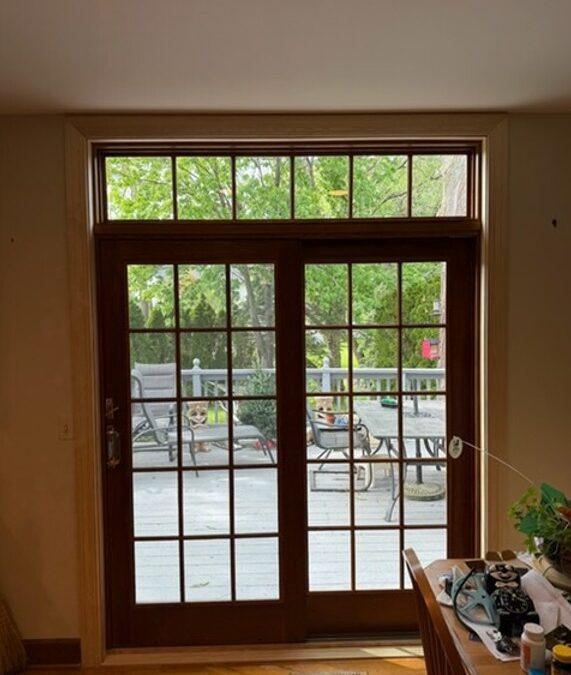
The best materials for front door replacement are fiberglass, steel, or wood when those options fit your priorities and the conditions of your home. Fiberglass offers a combination of durability and wood-like appearance, steel is a strong and budget-conscious choice, and wood provides natural beauty with extensive customization potential. There is no single best material for every front entrance.
At Paramount Windows & Doors, we provide residential door installation and replacement in Elma, NY. Our confirmed residential door selection includes fiberglass, steel, sliding glass, and wood/custom doors, while our broader residential selection also includes entry doors. For a front door project, we help homeowners consider material, appearance, maintenance, durability, budget, and the existing opening before choosing a replacement.
A front door has several jobs. It needs to operate reliably, suit the appearance of the home, stand up to exterior conditions, and provide the level of maintenance and durability the homeowner expects.
For most conventional front door replacement projects, fiberglass, steel, and wood are the three material categories worth comparing.
Each offers a different balance of qualities.
Fiberglass is a practical choice for homeowners who want strength without giving up traditional design possibilities.
Our fiberglass doors are designed for durability and are available in styles that can resemble authentic wood grain. This makes fiberglass particularly appealing when you want the warmth of a wood-inspired appearance while choosing a different exterior material.
Fiberglass may be a good fit when your priorities include:
Fiberglass can work especially well for homeowners who like the look associated with wood but prefer a material that requires a different maintenance approach.
It is still important to evaluate the specific door rather than assuming every fiberglass product performs identically. Door construction, glass, hardware, finishing, weather exposure, and installation can all affect how the completed entrance functions.
Steel is another strong option for residential front door replacement.
Our steel doors are positioned around security, strength, affordability, durability, easy maintenance, and flexible appearance. Available looks can include traditional wood-grain styling as well as smooth surfaces suited to more contemporary homes.
Steel may be especially attractive when practical performance and budget are high priorities.
Consider a steel door if you are looking for:
Our residential door information identifies steel as typically the most budget-friendly of the steel, fiberglass, and wood materials we offer.
That does not make steel automatically appropriate for every front entrance. Homeowners should also consider design preferences, exposure, hardware, the condition of the opening, and the specific door configuration.
For homeowners who prioritize natural materials and distinctive appearance, wood remains an important option.
Wood offers visual warmth that is difficult to duplicate exactly with manufactured materials. It is also highly versatile, which makes it useful when a homeowner wants a door suited to a particular size, shape, or architectural style.
Our wood and custom door options emphasize natural insulation, organic beauty, customization, and resilience when properly cared for.
Wood may be the right choice if you value:
The tradeoff is care. Wood is an exterior natural material, so ongoing maintenance should be part of the decision.
If your first priority is minimizing routine exterior upkeep, fiberglass or steel may deserve stronger consideration. If appearance and customization are more important, wood may justify the additional care.
Instead of looking for a universal winner, compare materials according to what matters most for your particular entrance.
Fiberglass and steel are strong candidates when homeowners want exterior doors with relatively straightforward care requirements.
Fiberglass offers strength and durability along with wood-inspired design possibilities. Steel provides an easy-maintenance surface and can be painted when appropriate for the product.
Fiberglass deserves consideration.
Our fiberglass doors can reproduce the appearance of authentic wood grain, giving homeowners another way to achieve a warm, traditional look.
Steel options may also be available with wood-grain styling, so appearance alone does not have to dictate the material.
Both fiberglass and steel are designed around strength and durability.
Steel is especially associated with security and toughness, while fiberglass combines high strength with design flexibility. Which one is better depends on the exact product and what you value beyond strength.
Wood stands out when customization is the main priority.
Its versatility makes it possible to accommodate a broad range of sizes, shapes, and design goals. That can be particularly useful for homes with distinctive architecture or openings that do not suit a standard appearance.
Steel deserves consideration because our residential door selection identifies it as typically the most budget-friendly material compared with fiberglass and wood.
The lowest initial price should not be the only selection factor, however. Appearance, maintenance, installation requirements, durability, and suitability for the particular opening should also guide the decision.
Front doors in Elma experience changing conditions throughout the year, including cold winter weather, snow, moisture, wind, warmer summer temperatures, and repeated seasonal changes.
That makes exterior exposure an important part of material selection.
A protected front entrance beneath a substantial roof overhang may experience different conditions from an exposed door facing prevailing weather. Orientation, surrounding construction, drainage, existing framing, and maintenance can also affect performance.
Fiberglass and steel are both worth evaluating when durability is a major concern. Wood can also perform well when it is correctly selected and properly cared for.
The goal is not to choose a material solely because of the local climate. Instead, consider how that material fits the particular entrance and the maintenance commitment you are comfortable making.
You do not have to replace an exterior door simply because it is old. Condition and operation are more useful indicators.
A front door may be worth professionally evaluating when you notice:
These symptoms do not always mean the door slab itself is the only problem.
Alignment, weatherstripping, framing, surrounding construction, hardware, or other conditions can affect operation and comfort. An evaluation helps determine what should actually be addressed before a replacement product is selected.
Choosing the material is only part of front door replacement.
The new door must work with the size and condition of the existing opening. Accurate measurement matters because poor fit can affect operation, sealing, finishing, and overall performance.
Our project process begins with understanding what the homeowner wants to accomplish. We evaluate the property and existing conditions, discuss available solutions, prepare an estimate, and move into ordering and installation after the project is approved.
That process gives homeowners a chance to compare materials in the context of the actual entrance instead of choosing from appearance alone.
A high-quality door still needs to be correctly installed.
General exterior door installation considerations can include accurate measurements, preparation of the opening, level and square positioning, proper fastening, insulation, air sealing, and appropriate interior and exterior finishing.
The exact requirements depend on the door, opening, building, and surrounding conditions.
This is why a front door replacement should be approached as a complete project rather than simply purchasing a new slab. The interaction between the door, frame, threshold, hardware, and opening determines whether the entrance operates as intended.
Professional installation also allows unexpected conditions around the existing opening to be identified before they create problems with the finished door.
There is no universal best material. Fiberglass is a strong choice for durability and wood-like appearance; steel offers strength, easy maintenance, and practical value, while wood provides natural beauty and extensive customization. Your best option depends on the entrance, budget, appearance goals, maintenance preferences, and exterior exposure.
Fiberglass can be a strong option for an Elma home because it combines durability, strength, and relatively low maintenance. It is also available in designs that resemble natural wood grain. The suitability of any particular door should still be evaluated based on the home’s opening and exposure.
Within the residential door options presented by Paramount Windows & Doors, steel is typically the most budget-friendly material compared with fiberglass and wood. Actual project pricing depends on the specific door and project, so an estimate is necessary for an accurate comparison.
Wood should be properly cared for because it is a natural exterior material. In return, it offers distinctive natural beauty, insulating characteristics, and extensive customization. Homeowners considering wood should weigh those design benefits against their preferred level of ongoing care.
We provide residential door installation and replacement in Elma and offer entry doors along with fiberglass, steel, and wood/custom residential door options. We can evaluate your existing entrance and help you compare materials suited to your project.
The best materials for front door replacement depend on what you want your entrance to accomplish.
Choose fiberglass when you want a strong, durable material with wood-like design possibilities. Consider steel when strength, practical maintenance, and affordability are high priorities. Explore wood when natural character and customization are central to the project.
At Paramount Windows & Doors, we help homeowners make that decision based on the actual entrance rather than a one-size-fits-all recommendation. Contact us to schedule a free evaluation and estimate for your residential door replacement project in Elma, NY.
Clark Doll is the Owner of Paramount Windows and Doors and brings more than 20 years of experience in premium window and door installations. As an OSI Certified professional and factory-trained installer, he shares expert insights to help homeowners make informed decisions about their home improvement projects.